My TpT Store

Saturday, February 14, 2026

How Do You Turn Static Worksheets Into Interactive Learning Experiences?

 Do you struggle with making worksheets interactive for your learners instead of just another task they complete and forget?

Many teachers want more engaging science activities but don’t have time to redesign everything from scratch. Recently, I revisited a middle school DNA structure activity I created years ago and realized the real opportunity wasn’t changing the content — it was changing how learners interact with it.


How this activity could become more interactive for learners:

  • Drag-and-drop DNA building
    Learners actively place DNA components into the correct positions to construct the strand instead of just coloring.

  • Guided discovery check-ins
    Short prompts or mini-tasks that help learners notice patterns and think through relationships as they work.

  • Instant feedback opportunities
    Learners receive immediate confirmation or hints when they make choices, helping them adjust understanding in real time.

  • Choice-based exploration of DNA structure
    Learners explore how different parts of DNA connect and function through interactive pathways rather than following one fixed sequence.


Interactive DNA structure drag-and-drop activity showing double helix assembly with labeled nucleotides, designed for science eLearning or biology instruction.


Design Rationale: From Static Task to Learning Interaction

Instead of treating the activity as a worksheet, I reframed it as a structured learning experience designed to help learners:

  • recognize DNA structure through visual patterns

  • identify relationships between components

  • build understanding before memorizing terminology.

This approach reduces cognitive overload and supports conceptual understanding — principles used both in classroom teaching and modern instructional design.


Decisions That Increase Engagement

Rather than focusing on completion, I shifted toward learner decisions:

  • guided discovery instead of step-by-step directions

  • pattern recognition instead of passive coloring

  • visual exploration that encourages noticing and applying relationships.

These changes allow a familiar activity to evolve into an interactive learning experience that could translate into digital tools like Articulate Rise or Storyline.


Learner Outcomes & Performance Alignment

When learning moves beyond passive completion, learners are more likely to:

  • recognize patterns independently

  • transfer knowledge to new diagrams or scenarios

  • engage with content at a deeper level.

Whether in middle school science or workplace training, effective design helps learners think differently after the experience. These same design principles apply beyond the classroom — from employee onboarding to software training — where the goal shifts from content exposure to behavior change.


Why This Matters for Busy Teachers (and Designers)

You don’t always need new materials — sometimes the biggest impact comes from rethinking how existing resources work.

This DNA activity has become a strategic portfolio example for me: showing how static classroom resources can evolve into interactive, learner-driven experiences.


Want to See the Original Version?

If you’re curious about the starting point for this redesign process, you can explore the original activity here:

👉 DNA Color-by-Number

Original DNA color-by-number worksheet showing labeled double helix structure with nucleotide color codes used as the starting point for redesign into an interactive eLearning activity.


💡 Your Turn

Have you ever revisited an older lesson and realized it could become something more interactive?

Share your ideas — or tell me one worksheet you’d love to redesign for deeper learning.


Monday, January 31, 2022

Are Open-Note Tests Effective Learning Tools?

Have you considered offering open-note tests?  Are you worried that the students won't learn the information if you allow it?  I explore those issues and more in this post!


Are Open-Notes Test Effective Learning Tools?


First, I'd like to say that I DO offer open-note tests, but not ALL of the time.  There are definitely pros and cons with open-note testing, and I'm going to dig in to both here.


Pros

What are the situations that work best with open-note tests for me?


For differentiation:  When most of my students are ready for the test but a handful still need extra support.  It helps for those who struggle with memory/recall and need the clues to help.

To practice answering higher-level questions: Specifically when we are practicing for the state tests that require a decent synthesis of the information and are not simple to answer just by reading the text or skimming.

To practice a much-needed skill:  This works best with nonfiction texts that allow students to practice skills like using picture/context clues or using the glossary/index.


Cons

What are the situations that don't work well with open-note tests for me?


When a student's notes are extremely disorganized or missing:  Then it takes them an extra long time to find what they are looking for and they can't/don't focus on the test questions.  As a side note:  I am using Google Slides and Docs exclusively for notes this year, so there is no such thing as "losing notes".  

Students lack the skills necessary to find what they are looking for in the textbook:  There are a couple of work-arounds for this.  First, use the textbook for formative assessments when you are able to guide small groups and remediate the skills after the assessment.  Alternatively, use student notes exclusively, rather than the textbook.

When a student is skilled at finding information in their notes, but they do not recall information on their own:  Once again, there is a possible solution: Alternate between open-note tests and closed-note tests.  If the students doesn't do well on the closed-note tests, you can have them correct the test or complete a retake.


As you can see, there are an equal number of pros and cons from my perspective.  The bottom line is that we have to know what's best for our students.  We have to meet them where they are in their abilities.  Personally, I have seen some positive results from using open-note tests as long as I don't use them all of the time.


Have you used open-notes testing?  What were your experiences with them?  I'd love to hear all about it!


Sunday, January 23, 2022

How to Help Students Excel at Multiple-Choice Tests

 Do your students need help with test-taking strategies?  Do they rush through multiple-choice tests and make careless mistakes?  If so, then my Multiple-Choice Test-Taking Strategies Checklist is for you!


Directions for Multiple-Choice Test-Taking Strategies

Checklist for Multiple-Choice Tests


Do you have any strategies you can recommend for test-taking?  I'd love to hear them!


Sunday, February 2, 2020

100th Day of School Activity

Do you want to celebrate the 100th Day of School in a meaningful way?  Would you like to incorporate some math into the celebration? Then this post is for you!


100th Day of School Activity


My son’s teacher recently sent a notice home that his class would be celebrating the 100th Day of School. Being a Middle School teacher, I had completely forgotten this, but I was totally game to get back into my elementary school vibes!


100th Day of School Activity


So I got to thinking:  What can we make instead of buy?  I had two reasons for this.  First, I would like him to count to 100 as he decorated it and secondly, I'm not sure he will use it again so I don't want to spend money on it!


I decided after some discussion with my son to go with either a paper bag best or crown.  We could easily decorate either one of these with 100 stickers of his choice.

I searched around for how to make these two things and found a couple of cool DIY videos. The links for each of them are below.


We settled on making a crown. This seemed like the quickest solution for us because we don’t typically have brown paper bags big enough to cut a vest out of lying around the house.

To be honest, I’ve got a lot going on at my school right now so I went to my favorite place or finding educational resources. Of course I searched Teachers pay Teachers!  This is the crown I found that we like the most. Bonus points for it being cheap!

I had some bulletin board border that I used to attach the crown to.  It made the overall crown less flimsy and gave more area to attach the stickers. 


100th Day of School Activity


100th Day of School Activity


After printing, cutting, and decorating it with stickers this was the end result.  Not my best picture, but I was under a time crunch to get it before my little guy could put it on his head.


Do you have any other fun and inexpensive ways to celebrate the one hundredth day of school? Comment with some ideas below!


Sunday, January 26, 2020

Winter Self-Care in Ten Minutes or Less

It's that time of year when we find ourselves in need of a new self-care routine.  In this post, I’m going to share my favorite items and techniques that take 10 minutes or less.  Most of them can even be done at your desk!


First, I’m going to share the relatively cheap or free self-care items and techniques that I love.

Wash your hands!

We all know how important hand-washing is to our overall hygiene and health. However, we are all also under strict time crunches with our schedule. Please do not skip washing your hands. It’s not worth it the risk of getting the flu!

Hydrate your skin after washing your hands

We all know how important it is to hydrate our bodies, but we often neglect hydrating our skin. Every time you wash your hands, you should be applying lotion during this incredibly dry season. Cracks and dry skin on your hands let bacteria and viruses in. My favorite lotion is by Doterra but any lotion will work.


Hydrate your body with more than just water


Bone broth powder
I buy packets of these bone broth packets at Walmart. Bone broth has amazing anti-inflammatory and healing qualities. It also adds extra protein to your diet without adding a ton of extra calories. I just pour one of the powder packets in a mug and add boiling water and within minutes, I have a wonderfully nourishing cup of broth to sip on.

Magnesium tea

I have an entire post on how to make Magnesium Tea. In that post, I talk about the amazing qualities that magnesium have for healing your body and calming your mind.


Now I’m going to share some of my self-care items that will require a small investment but pay off big time in the mental health department.

My favorite wireless earbuds last a long time before needing to be recharged.  On rough days I like to put on either an uplifting music playlist or a positive video on YouTube. On long days, I love listening to energizing music. Wireless earbuds allow me to move around the classroom and complete tasks without being tied to my phone.  The same thing applies at home. Doing dishes is a lot more fun when I’m jamming to my favorite songs. 

Get some sunlight… Or get the next best thing

My room is on the ground floor of our building. That means I do not get any natural sunlight in my classroom. Especially in the winter, I get the blues when I can’t get enough fresh air and natural light. So, that’s when I reach for the next best thing: A Portable Light Therapy Energy Lamp.  Just spending 10 or 15 minutes in front of it while sitting at my desk grading papers makes a huge difference in my mood.  

Combat dry air

Studies have shown that dry air carries viruses more readily. At home, I have humidifiers running constantly but in the classroom it is a little more difficult. So the answer is a portable humidifier with a USB cable.  I can plug it into my laptop and move it around the classroom on my portable podium.   The optimum humidity is between 40 to 60%. If you are curious what the humidity of your classroom is, you can use this hygrometer that I use at home.

Try some aromatherapy

I use a portable diffuser that also has a USB cord that I plug into my laptop and travel around my classroom with. I turn it off when students are in the room. Several studies have indicated that the benefits of diffusing essential oil last 2 to 3 hours so it doesn’t need to be on all of the time.

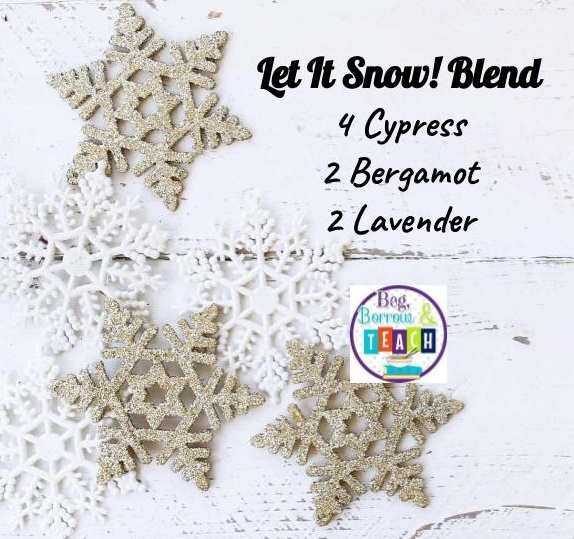
Here is my favorite January-inspired diffuser blend if you need some extra inspiration.


Nurture your body

I saved one of my favorite new things for last. I bought myself this portable body massager for Christmas. It is amazing because it has a car charger converter so I can use it when I am waiting to pick my son up at school in the car line. Then I can use the AC adapter at school for a quick neck and shoulder massage while I’m sitting in my desk chair.  It has a heat option that feels amazing on those cold winter days. 


What are your favorite self-care routine‘s and items? I am always searching for new things to nourish my soul.


Sunday, December 1, 2019

Cyber Monday Sale

Are you ready to keep the discounts rolling with a Cyber Monday Teachers Pay Teachers sale?  If you said yes, then this two-day site-wide sale is for you! 

Read about it below and click HERE to get started shopping.


During the site-wide sale, you can save up to 25% off TpT resources.
Happy shopping!


The sale will start on Monday, December 2nd at 12:01am ETand will run through Tuesday, December 3rd at 11:59pm ET. 

I will be offering a discount of 20% AND TpT will provide an additional 5% promo code to be used during checkout.  That means you will get a total of 25% off EVERYTHING in my store! 


Monday, February 25, 2019

It's Time for a TpT Sale!

What's on your TpT wishlist?  TpT is hosting a 2-Day sale, starting tomorrow!  So whether you need lesson plans, classroom reward ideas, or just some pretty new labels for all those supplies, TpT has you covered!


I will be offering a discount of 20% AND TpT will provide an additional 5% promo code to be used during checkout (see below).  That means you will get a total of 25% off EVERYTHING in my store! 

The sale starts TOMORROW, February 26th at 12:01 a.m. ET and runs through February 27th at 11:59 p.m. ET. 


Happy shopping!


Monday, January 28, 2019

How to Teach When You Have Limited Time

Are you having a difficult time covering all the material you need or want to each day?  Do you have shortened class periods that present a challenge for your teaching style?  This post gives some of my best solutions to these problems!


How to Teach When You Have Limited Time


Think About What You Absolutely Need to Teach First


Choose Quality Over Quantity

Pick a few things to cover, go deep with those few things, and make connections to as much as you can. Quality over quantity will give you the most bang for your buck. Plus, if you have fun "independent" study projects for them to design and complete, they'll be begging to get to the subject you teach.


Carefully Consider the Learning Activity


Sometimes things like waiting for students to write down notes can take an enormous amount of time.   I'm not saying that note-taking is not important, but think about what they’re writing and why. Can some of it be replaced with videos or printouts?


Teach Students Vocabulary During Activities Instead of in Isolation 

Instead of teaching vocabulary words in seclusion, include/ teach them while you’re doing a hands on activity. This can save a lot of time and you can always take the final moments of class to review vocabulary words each day to reinforce their meaning.


Try Stations

Just keep in mind that you don’t have to complete the rotations in a day. It can carry on for tomorrow or the next day.


Alternate Activities Throughout the Week

This is especially helpful if you teach multiple subjects and some subjects are allotted less time than others.  For example, if you have 90 minutes for math and only 30 for science. 


Try a Weekly Schedule

Once you have chosen the activities that are the most important, come up with a weekly schedule for when you will use them.

A sample weekly schedule might look like this:
Notes/Instructional videos on Monday/Tuesday to prepare students for in-depth things like labs or projects
Labs/Projects/Stations on Wednesdays/Thursdays
Quizzes on Fridays


How to Teach When You Have Limited Time: How to Start Teaching as Soon as Students Enter the Room


I did another blog post about this recently.  Click here to learn more.


What else do you do to maximize your limited time in class?  This is a subject I always need extra advice in!


Monday, January 21, 2019

How to Help Absent Students Catch Up

How do you help students who are absent to catch up?  Here are some of my best tips for helping students help themselves and how you can assist them when they struggle with catching up on their own.


How to Help Absent Students Catch Up


Have Things Set Up in the Classroom So They Can Help Themselves


"Were You Absent?" crate


I have a crate with a hanging file for each period I teach. I fill out a sheet for what we did that day or maybe even two or three days depending on if my plans are set in stone. Than I make copies. When someone is absent I just put their name on it and put it in the correct hanging file.  Student responsibility to check crate when they return.


How to Help Absent Students Catch Up


Table of contents poster

I keep a binder with all of the items students should have completed.  It's basically the same as the one each of the students keeps for my class.  The first page is the Table of contents.

This is just a laminated piece of chart paper.  I write on it with dry-erase markers to keep it updated.  It helps students see what they missed as soon as they walk in.  Students know to ask for help from either teachers or accountability students (see my explanation below) to find these assignments.  Most often, I keep them in the Absent Crate I mentioned above.


How to Help Absent Students Catch Up


Make up work poster

This is another laminated piece of chart paper.  I write the graded assignments on this one.  Most often, these will not be kept in the Absent Crate because I want to make sure:
1.  Students are given the proper testing environment, if necessary
2.  Students are given the proper assistance or information in order for it to be a proper assessment


How to Help Absent Students Catch Up


Online homework/assignments calendar

My county uses an online repository called Blackboard, but you could just as easily have a classroom website with a Google Calendar that lists the daily homework and assignments.  I will often take pictures of the notes written on the board and attach them to the calendar so students know what needs to be done regarding those assignments.

Use Accountability Students 

These are the students who are organized, usually finish before other students, and are looking for a way to help in the classroom.  A good way to let them help is to have one of them fill out a "While you were out sheet" for the missing student.  It has a short description of what they did in class and the homework assigned.

A word of caution for this technique:  If you have a student fill out a form I suggest that you sign off on it that it is accurate. 


Making Up Stations and Labs

Divide the learning/lab into several stations

That way if a student is absent for a day or two, they can still make it up while working with the other students in the days following their return to school.


What About Students Who Are Absent for Several Days?


First, decide what assignments you must have for assessment purposes.
These are the assignments you want to help students tackle first.

Next, decide if you can modify any assignments.
Sometimes we give assignments for enrichment.  Sometimes we give assignments to help students dig deeper and think critically.  I'm not saying you shouldn't give these type of assignments to students who are chronically absent, but you may want to cut out any extra work that doesn't directly relate to what you will be assessing on the final test.

Be flexible with due dates.
My policy is that I give two days for every day the student is absent for them to turn things in.  That being said, I remain as flexible as possible.  If a student is working diligently to complete an assignment but it's taking a little longer, I tend to support that whenever possible.  To me, the learning is more important than following a strict deadline when a student is trying to catch up.

Decide what needs to be done at school and what can be sent home.
Things like labs and assessments obviously need to be done at school.  Things like vocabulary and study guides can be sent home for most students who don't have special needs.  If you send assignments home, you may want to communicate with the parents what you will be sending home and when it is due, along with any special instructions.  

Decide if you can exempt any assignments.
Sometimes, for one reason or another, students just can't make up the same amount of work that their classmates completed while they were absent.  In those cases, I look at everything I assigned a grade for during the period of time the student was absent and I decide which of those things to exempt (leave blank in my gradebook).  


How do you help your students catch up?  Which of the things I mentioned will you be using in the future?  I'd love to hear your thoughts!


Monday, January 14, 2019

Let It Snow! Essential Oil Diffuser Blend

Let It Snow is the perfect blend for January  because as a teacher and parent, I am all for snow days. I love getting to spend the extra time with my son and it's a good excuse to stay in my comfy clothes drinking hot chocolate. When I taught 4th Grade, the students did the “snow dance” at home by turning their PJs inside out and flushing ice cubes down the toilet to increase the probability of snow. I consider this Diffuser Blend to be my version of bribing the snow clouds to bring on the snow.


Let It Snow! Essential Oil Diffuser Blend


Check out my video for the full details: Let It Snow! Essential Oil Diffuser Blend.


Saturday, January 12, 2019

Birthday Cake Essential Oil Diffuser Blend

Birthday Cake is the perfect blend for February because I’ve baked up a spice cake diffuser blend that will stand up to this cold weather.  It will both uplift and calm you. February also happens to be the birth month of several of my favorite people, including my son and oil mentor (Hi Hillary!).


Check out my video for the full details: Birthday Cake Diffuser Blend. 

Got any suggestions for diffuser blends I should do in the future?  I’d love to hear them!


Monday, January 7, 2019

What Your Student Teacher Wishes You Knew

What makes a mentor teacher a GREAT mentor teacher to a pre-service teacher?  How do you make a student teacher's time in your class worthwhile?  This post shares the things your student teacher wishes you knew.


 What Your Student Teacher Wishes You Knew


First, there are some things the mentor teacher (MT) needs to ALWAYS keep in mind:

Student teachers are often afraid of making more work for their MT!  
Just be honest with your student teacher, they are as nervous as you are.

Keep in mind that they are a student and will make mistakes. 
Help show them that it’s not the end of the world.

Remember that you do have a lot to give. 
You have been in the trenches.  Don’t underestimate how valuable both your past successes AND failures are to your student teacher’s learning. 

Know who the point of contact is for the college your student teacher is attending. 
I didn’t ask who this was at first for my student teacher, even though I was expected (unbeknownst tonme) to communicate with this person on a regular basis.  If your ST is attending an online college, this person may not have been made abundantly clear to them. Investigate this from the start and things will go more easily. 

YOU are still in charge of your classroom and responsible for student learning. 
Be strong and do what is best for your class.  Most colleges won’t insist that you do anything that you don’t feel is right, but if your student teacher has an assignment that impedes your classroom learning, have a talk with the representative at the college.

Treat your ST as a colleague and partner teacher.  Focus on how you two will develop a professional relationship. 
If you feel comfortable, try being hands-off more often to allow the ST to figure out their style and try things they want to put into practice. 


Figure out a schedule for when your ST will observe and teach

The student teacher (ST) needs to build relationships with the students the same way any classroom teacher does.
It's always best to allow the ST to observe for a full day or two, and longer, if possible.  Just allowing the ST to get to know the students first and seeing how you run the classroom is a huge help!  Knowing the students allows the ST to understand what they like and dislike and how they prefer to work.  Another option is to have the ST observe senior teachers around the building.   

On observation days, help your ST grade some assignments, do attendance, and hand back papers. This helps them understand your grading system and how you assess students. It also helps the ST learn the kids' names and get to know them better. 

Sit down with your ST before they start teaching and come up with a gradual-release schedule of responsibilities. 
The  responsibilities should include how the ST will gradually turn the classroom back over to you before they leave.  If you teach multiple subjects, choose one to let your ST focus on at first.  If you teach one subject, choose particular aspects of that subject to release to the ST.  For example, let them plan the opening activity that might include reviewing previously taught material or an anticipatory question that gets the students thinking about what the lesson of the day will teach.


After you decide the gradual-release schedule, focus on the lesson planning.

Provide your ST with the general lesson plan template and things they can immediately implement that you use to plan with. 
Ask your ST if their college already has a lesson plan template because many do.  If you can allow them to use that template instead of the one you use, that will help your ST.  If the college hasn't provided your ST with a template, give them the one you use.

Try co-teaching or partner teaching at first.
Write the plans together and divide your lessons into segments, splitting the lesson delivery. For example, she opens and closes and you present new material.  This is a great opportunity to provide more support for kids.

Use the beginning as an opportunity to do more small groups.  Some options to do this:
  • Encourage the ST to modify your lessons and materials for lower students. 
  • Have the ST pull small groups for remediation or enrichment. 
  • Give the middle-achievement students to the ST for small groups. The low- and high-achieving students are the most challenging to grow, but the middle group often needs guidance and monitoring to keep on track.

If you're worried about the inclusion kids just keep that class or group. 
There is no rule that stays you must give them every class or group. 


Give continuous follow up and real classroom take-aways. 

Make the time to sit down and talk with with your student teacher. 
This should be daily, ideally several smaller sessions, at first. This gives the ST time to pose questions and the MT to address any concerns as they arise. After the first couple of weeks, ask your ST how often they would like to meet, but still ask often how they’re doing even if you’re not meeting as often. Sometimes an ST just needs the MT to check in on them and they will open up about their needs. 

Use rubrics for your observations of your ST. 
It will help guide you on how you need to help them and they will know your expectations.

Give direct feedback. 
Don't make "suggestions"  if it's something that they actually need to be doing.

Teach your ST about evaluations. 
They need to know what a classroom evaluation by an administrator or School Board official will look and feel like.  Having another experienced teacher come in to do an evaluation is a great way to do this.

Make sure your ST knows how to do a parent-teacher conference.
They also need to know what to do on Back-to-School Night.  Your ST also needs to be communicating via emails/phone calls with parents for students successes and concerns. 

Be helpful instead of just taking an hour of time to talk. 
Talk while helping staple homework packets, etc.  Yes, you want the ST to learn how to juggle all of the responsibilities of the job, but remember that they are overwhelmed MOST of the time. Never underestimate how much help it is to do small things like administrative duties for them every once in awhile.


What else do you think Student Teachers want or need the seasoned teacher to know?  I know there's so much more that needs to be included than what I have here!


Monday, December 31, 2018

How to Start Teaching As Soon As Students Enter the Classroom

How can you begin the learning as soon as students enter the classroom?  This post shares my best tips for continuing the learning from one class to another and using every possible minute to its fullest.


How to Start Teaching As Soon As Students Enter the Classroom


Build Relationships First, Even if It’s not the Beginning of the Year

The beginning of the year is a great time to do this, but so is the return from a holiday break or anytime you need to reconnect with your class. 

Each day's warm-up should have something to do with relationship-building at first.  For example:

Monday: a deep breathing exercise/strategy.

Tuesday: students share a place they would travel to and explain why.  Bonus points if it's a place you will be learning about this year.

Wednesday:  Share what's going well and what needs improvement.  It could come in the form of "Two Successes and an Improvement".  Have students start with two things that are going well and give one thing that needs improvement.

Thursday:  What are you curious about?  Let students research and learn more about whatever they are curious about.  Bonus points if it's related to the subject in your classroom.


Friday:  Break out all of those get-to-know-you worksheets from the beginning of the year and start playing games with them.

Here's some things I like to do/revisit those get-to-know-you information you've already gathered:


Get-to-Know-You Name Tags


How to Start Teaching As Soon As Students Enter the Classroom


If the traditional get-to-know-you activities aren't what you're looking for:

Fresh Alternatives to Get-to-Know-You Activities


How to Start Teaching As Soon As Students Enter the Classroom


After Relationship-Building, Focus on Directions


Have the Directions Clearly Displayed for Students as They Enter the Room

Use your Smart Board, projector, doc cam, or simply write the directions on your board.  I like to have them written in a numbered list so students know what to do first, second, and so on.  
This ensures that you are able to do the executive tasks, such as take attendance and get out materials for the next lesson, while students are preparing for learning themselves.

Write/Type These Directions on the Board Before You Leave Each Day

It's the last thing I do each day to prepare for the next day.  If you can't hand write the directions, try typing them and projecting them.  This might actually make it easier and quicker for you and your students.  You can blow up the font and edit it without losing much time.

Make Prep Work Part of the Opening Activity

There are administrative things that need to be done on almost a daily basis.  Getting students to do this on their own at the start of class makes everything go more smoothly and quickly for the rest of the lesson.  Some things I often have students do:
  • Write homework in their agenda
  • Get out papers that I will collect/grade so they are ready to turn in
  • Get papers/materials they will need during the class


After Directions, Decide How You Will Encourage Good Behavior

Incentivize It

Teach them to get to work on it even before the bell rings and give them participation points for doing so.  You can award individual or team points if you have them sitting in teams.  You'd be amazed at how positive peer pressure can make things happen!


Make It Cumulative for the Week

Sometimes the warm-up will be a question on what we learned the day before. Then I have them turn in the whole thing on Friday. This way if a student is absent or needs more time to complete a particular assignment, they do not feel stressed to try to get it done all in one class. 

Go Digital 

If you have to ability to use Google Forms, you can both  assign and instantly assess your warm-up questions and activities.  Here’s is a detailed explanation of how to use Forms to create and assess. 


Finally, Make It Easier for Students to Continue the Learning on Their Own 

Give Students a Sneak Peak at What They Will Learn That Day 

Having a warm-up activity each day will establish what students are going to be learning and/or extend previous learning through a question, political cartoon, quote, etc.  

Have Students Review Previously Taught Material

This could be material you taught this year, or it could be material that should have been taught last year in your subject area. I will sometimes have students quiz each other on previous test material or study guides during this time.

Vocabulary 

I go through and find the most difficult words from the state test and assign a few at a time.  These are from the unit I’m ABOUT to teach. I only have them do the definition and draw a picture and we go over examples and non-examples as a class. It front-loads the information so students can participate in class discussions in the future.  If you're interested in learning more, check out my Vocabulary Instruction and Assessment packet.


How to Start Teaching As Soon As Students Enter the Classroom: Vocabulary


How do you get students to begin learning as soon as they enter the classroom?  I'd love to hear your thoughts and tips!


Sunday, December 23, 2018

Gingerbread House Essential Oil Diffuser Blend

One of my students specifically requested that I make and diffuse this blend to set the holiday theme in my classroom. Even if you're not a teacher, this blend really has that holiday spirit!


Gingerbread House Essential Oil Diffuser Blend


Check out my video for the full details:  Gingerbread House Essential Oil Blend


I hope you enjoy it as much as I have!


Monday, November 26, 2018

How to Find the Time to Lesson Plan

Do you ever find it difficult to find the time to get everything done at school?  Do you have to take work home just to keep up?  This post has some ways you can manage the work each day and make more time for yourself!


How to Find the Time to Lesson Plan


Use Your Prep Time As Efficiently As Possible

I know, I know. Planning periods are often taken up by things like meetings and conferences, but when you do get those few unencumbered moments, use them to your advantage. 

Do the Things at School That Can’t be Done at Home: 

Copying 


I try to get all my copies done on Fridays for the upcoming week if I haven't had time during the week to get it done.  The copier is ALWAYS breaking, so I don't want to wait and take the chance the following week that I won't be able to get it done.

Parent phone calls 
Please don't EVER make these from your home or cell phone.  For one thing, it's important to keep those healthy boundaries between work and home.  For another, this is one of those things that really is best done at school for several reasons.


"Batch" the Tasks
What I mean by "batching" is to focus on one thing/subject at a time and finish that before moving on.  For example:

  • Make the lesson plans
  • Gather the materials
  • Make the copies
  • Grade the assessments
  • Decide if any of these things can or should go home for completion (with the exception of copying)


Plan With Your Grade Level When Possible
Try to collaborate with anyone who teaches the same thing so you can work together on units.


Don't Reinvent the Wheel
If lessons or units don't need to be changed from previous years, don't bother with them. Focus on  making your lessons work smarter, not harder.

  • Make sure you have accommodations/modifications written into your lessons for students with special needs. 
  • Fluff (worksheets, filler notes) should get tossed aside quickly for learning driven by the students, such as projects where they have to actually find the answers instead of you preparing the information for them.
  • Have a set number of assignments that repeat and use the same template. So the form doesn't change, but the content does. That way you don't have to create everything over and over.
Use An Online Planbook
I have the app on my phone, which means I can change or view lessons ANYTIME, ANYWHERE.
  • PlanbookEdu :  This website has practically saved my life this year.  Yes, it's not free, but it's worth every penny.  You can input your state standards above your lessons and it keeps track of how many you've covered in your lessons.  You can attach files that you need.  You can print and email the whole plan book or a selection.  In a word, priceless.


When You Can't Get It All Done During Your Planning Period:

Have set “late nights” like Tuesdays and Thursdays (or whatever works with your schedule). 
That way you can get what you need to get done when there aren't so many people around to break your concentration. You're sacrificing a bit of time for work so that your don’t have to be stressed when you’re hanging out with your family. That way you can have the energy you need to give them.

Get To Work Early Instead of Staying Late or Taking Work Home
You will be so much fresher and not have the same interruptions you do by staying later in the afternoon. Of course if you're like me, I'm still groggy in the morning so I actually prefer staying later in the afternoon.

Be Very Selective About The Work You Do Take Home
Whether you have a family or not, your time in the evenings is short and you NEED downtime to recharge your batteries. Sure, you can power through some nights without much sleep, but if you do it too often, you are setting yourself up for teacher burnout.

You can read more about this in my "Avoiding Teacher Burnout" post.


How to Find the Time to Lesson Plan and Avoid Teacher Overwhelm


Go to Your "Happy Place" to Grade Papers


Sometimes I have to leave the house to grade so concentrate at a Starbucks and knock out papers that way.

Join An Online Support Network
There are many Facebook and online teacher communities designed to support your effort to get more work done at school and bring less home. 

Many teachers have highly recommended the 40 hour teacher work week club. 


How do you balance it all?  I can always use more tips on how to do this!