My TpT Store

Sunday, February 19, 2017

Teacher Savior: Increasing Productivity by Prepping the Night Before

Raise your hand if you would like any of the following things:

1. A smoothly-running morning routine
2. Completing projects and to-do lists on time
3. Maximizing your productivity at home and at work

Is your hand up?  I know mine is!  So, it's in that spirit that I want to share my night-before-school routine that has changed my productivity and happiness level the next day.

The following are the changes I've made that have maximized my productivity:

Fill out a daily planner each night for the day(s) ahead
I have been printing and using this planner by The Momma Diaries, which is perfect for my needs.  I'm sure you could use an annotation app to write directly on the digital planner, but I just prefer the pen and paper version.

To fill out the planner, I look at the following things:

  • My calendar in my phone to see about upcoming events
  • My email to see what bills are due and what I need to buy
  • I also talk with my husband on the weekends to see what our combined schedule looks like for the week ahead.

I don't focus so much on filling out anything to do with work, unless I have to wear a particular outfit or bring certain materials to school the next day.  After all, I have a planner at school specifically designed for productivity at work!

                
Beg, Borrow, and Teach!: Increasing Productivity by Prepping the Night Before


In the morning, I take a few minutes to fill out the "Things I'm Grateful For Today" and "Mood" sections
I'm personally working on building more gratitude into my days, and it really helps me set the tone for the rest of the day.


I love filling this out while I'm drinking my Magnesium Tea.


Do you use a daily planner for personal or work productivity?  I'd love to hear how!


Sunday, February 12, 2017

Winter Creative Writing: Story Sparks

Would you like to fight writer's block with a piece that is seasonal, includes figurative language, and gives students a choice of their topic?  Then this Winter Creative Writing Using Story Sparks unit is for you!


Winter Creative Writing: Story Sparks writing prompts unit

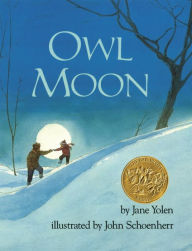
Some of the mentor texts I use as read-alouds:


Winter Creative Writing: Story Sparks writing prompts unit


Winter Creative Writing: Story Sparks writing prompts unit


Winter Creative Writing: Story Sparks writing prompts unit


We collect adjectives, similes, metaphors, onomatopoeia, and quotes we would like to use on our own writing on anchor charts as we read.

After we've created our anchor charts, I introduce the Winter Creative Writing Story Sparks and students choose their writing topic.


Winter Creative Writing: Story Sparks writing prompts unit


Next, we review the rubric and graphic organizer to help guide our writing.  


Winter Creative Writing: Story Sparks writing prompts unit


Before I meet with small groups, I go over the editing checklist below and how to be a good buddy editor.  


Winter Creative Writing: Story Sparks writing prompts unit


As I meet with groups, the other students are looking at mentor texts, filling out their organizers, and editing their peers.

Easy and so much fun!  


If you'd like to pick up a full copy of the unit plans, click here.


Do you use choice boards or story sparks in your writing block?  I'd love to hear how!


Monday, February 6, 2017

TpT is Showing Some Love: Valentines Sale

It's a TpT site-wide 2-Day Sale!

It runs Tuesday, February 7th at 12:01 a.m. (ET) through Wednesday, February 8th at 11:59 p.m. (ET). 

So stop by my store for up to 28% off on Tuesday and Wednesday!


Here's to you finding something to sweeten up your day!


Happy shopping!


Sunday, January 29, 2017

DNA Color-by-Number

Would you like an easy way to teach the nucleotides and base pairs of DNA?  Do your students like crafts and/or coloring?  Then check out my DNA Color-by-Number!


DNA color-by-number to teach the nucleotides and base pairs of DNA.  Life Science: DNA


This Color-by-Number worksheet is meant to be an introduction into the nucleotides and bases that make up the structure of DNA.

I use this as an introductory activity, with no prior teaching. 

After it is colored, we talk about the matching patterns of the base pairs (A with T and C with G). 
I also explain to them that these pairs can happen in an infinite number of sequences, such as:
A-T, C-G, A-T, C-G
OR
C-G, C-G, G-C, A-T

I further explain that any mismatched pairing of bases, A-C or G-T for example, would result in a mutation of the gene.  This mutation could be inherited by the offspring of the organism.

Finally, we talk about how not all mutations are a bad thing because this is how evolution happens.

If you'd like to pick up a copy, click here.


How do you introduce the structure of DNA?  I'd love to hear about it!


Sunday, January 22, 2017

Steps to Long Division Bookmarks

Long division:  It's so important to so many other math concepts.  It's also a tough concept to master and memorize.  So what do we do?

Long Division Bookmarks with mnemonics for the family and the McDonald's.


Is your hand up?  I know mine is!  It was with these goals in mind that I created my Steps to Long Division Bookmarks.  


These are dual-sided bookmarks that present the steps for long division in two ways:
The first uses the mnemonic of the family (daddy, mommy, sister, brother, Cali, Rover) 
The second uses a cheeseburger (does McDonald's serve cheese burgers). 

The bookmark format allows students to keep this visual reminder in their textbook, or even in their nightly reading books for a handy study guide. 


Long Division Bookmarks with mnemonics for the family and the McDonald's.


Long Division Bookmarks with mnemonics for the family and the McDonald's.


Just print, glue the two sides together, and laminate.  Then students can choose which mnemonic makes the most sense to them.

You can pick up a copy by clicking here.

What tips and tricks do you have for helping students learn and study the steps for long division?  I'd love to hear from you!


Sunday, January 15, 2017

Teacher Self-Care Practice: Essential oils

I've recently come to love my essential oils for pulling double-duty in my home AND in the classroom.  Read this post to see how I use them for calming, health, and clarity.


Here are the ways I use oils in the classroom:

1. Diffusing


Teacher Self-Care Practice: Essential Oils in the classroom.

I love this little portable diffuser.  It has a USB cord and is small enough to fit in a cup holder in your car.  That means you can easily take it from your car to classroom.  Just a drop or two of oil, and this bad boy will diffuse for a few hours.  I love that it will not make the whole classroom smell of essential oil, just my desk area.


2.  In my water

A drop or two of lemon oil encourages me to drink more water and detoxes my system.


3.  In my tea

A drop of On Guard in my tea gives it a nice clove, cinnamon, spicy taste and protects me against sickness.  Bonus:  If it's Magnesium Tea, it promotes calm, clarity, and energy.


Teacher Self-Care Practice: Essential Oils in the classroom.


4.  Cleaning 

My desk, the tables, the counters.  Middle-schoolers still get sick... a lot. and their germs are all over the place.  At the very least, I need to wipe my desk down before eating/snacking.  If I see/hear evidence of a kid being sick, I start wiping chairs and tables.


Teacher Self-Care Practice: Essential Oils in the classroom.


Do you use oils in your classroom?  I'm looking for more ways to use them, so I'd love to hear how you use them!


Sunday, January 8, 2017

Winter Poetry and a FREEBIE

Want some ideas on how to keep the writing curriculum fresh, even on those long Winter days?  Then check out my Winter Poetry Unit and Winter Poetry Freebie: Haikus!  Poetry + Figurative Language = FUN during your writing block that will keep the creative juices flowing. 


Winter poetry and figurative language lesson: Cinquains, limericks, haikus, freestyle poetry


It doesn't matter if you're in elementary school or middle school when it comes to poetry.  Everyone loves poetry!  You can dig pretty deep into figurative language and writing structure with something so simple as a poem.


This unit is designed to have writers use the following strategies to vary their writing and use descriptive terms:
~"Show, Don't Tell"
~Figurative Language: Onomatopoeia, Metaphors
~Creating rhythm in poetry: Alliteration, Rhyming
~Types of poems: Cinquains, Limericks, Haikus


Winter poetry and figurative language lesson: Cinquains, limericks, haikus, freestyle poetry


Winter poetry and figurative language lesson: Cinquains, limericks, haikus, freestyle poetry


What's poetry without some really cool forms of figurative language?  My Winter Poetry packet includes:
Onomatopoeia
Metaphors
Personification


Winter poetry and figurative language lesson: Cinquains, limericks, haikus, freestyle poetry


And NOW.... a FREEBIE!


Winter poetry and figurative language lesson: Cinquains, limericks, haikus, freestyle poetry


Haikus are a wonderful way to dig deep into word choice and the writing process without a lot of pain.  This FREEBIE includes:
~Description and rules for writing a Haiku
~An example Winter Haiku
~Instructions for writing and editing a Winter Haiku 

What are your favorite ways to get the students to buy into figurative language and the writing process?  I'd love to hear how!