My TpT Store

Sunday, December 29, 2013

Mixing Weather and Prepositions

We've been learning about cloud types in Science and we're constantly reviewing grammar.  So, it's always nice when we can combine the two.

First, here are some great ideas for differentiating between the cloud types:

A cloud flip book from Crazy for First Grade blog.


Take the kids outside to identify what's in the sky with this cloud viewer from Nature Watch.


Make a cloud strip that lists the different cloud types by altitude.  This came from The Inspired Classroom blog.

After introducing the cloud types and their altitudes, we reviewed prepositions.  Then we watched a cloud-preposition video.


As an extension, we did the following activity:
   Have students draw, label (name of cloud and prepositional phrase of position in sky), and cut out a shape of one of the clouds:  Choose one of the three main types of clouds (cumulus, stratus, cirrus). 
·         Have them write about what the presence of the cloud means for the people on the ground (weather conditions).
·         When all the clouds are ready, tell your little meteorologists to put their heads down and hang out at their desks.
·         Play music while students hide their clouds around the room.
·         Have each child one at a time go hide their cloud somewhere in the classroom. When they are done, have them tap the next student on the shoulder.
·         Have the students write sentences, using prepositions, describing where they found or hid their objects.   Example: The puffy cumulous cloud was hiding UPON the sunny window sill OR I found my plump cumulous cloud hiding BENEATH a hefty stack of chairs.  This is also a great lesson on word choice and adding DETAILS to your writing.
 
How about you?  Have you combined some Science and grammar in your classroom? 

Sunday, December 8, 2013

Polar Express Day

Our school celebrates Polar Express Day.  We try to make the whole day about it, including the core subjects.  Here are some of my brainstorm ideas for this year:

Math:


This idea comes from a post from Little Miss Glamour Goes to Kindergarten.  I would adapt it for fourth grade by having students create repeating as well as growing geometric patterns with the confetti.  I love that she has them use paint brushes for the glue and keeps the different patterns separate in an art tray.  I found some cute snowflake confetti, winter foil confetti and poinsettia confetti for this purpose.  I also found a blank ornament coloring page for the outline.

The next graphing activity was inspired this post on Celebrate Second Grade blog.  She has them taste test different flavors of candy canes and then graph the results.  I found an assortment of mini candy canes here. 


I found a great candy cane graphing activity on TpT that has students using tally charts, frequency charts, bar graphs, and picto graphs.

Social Studies/Language Arts:
I found a great map skills activity called "See the World With Santa" on TpT.  It has students use a map, atlas, or globe to research cities by longitude and latitude that Santa would fly through.

Writing:
I have a winter poetry unit on TpT in which I have students write haikus and make snowflakes.  I found a better way to make the snowflakes out of coffee filters in this blog post.  I think I would still teach students how to write the winter haikus and try the coffee filter snowflakes.

We're supposed to do "step-by-step" writing in fourth grade, so I was happy to find this "How to Make Hot Chocolate" FREE activity on TpT from Third Grade Bookworm. 

Science:

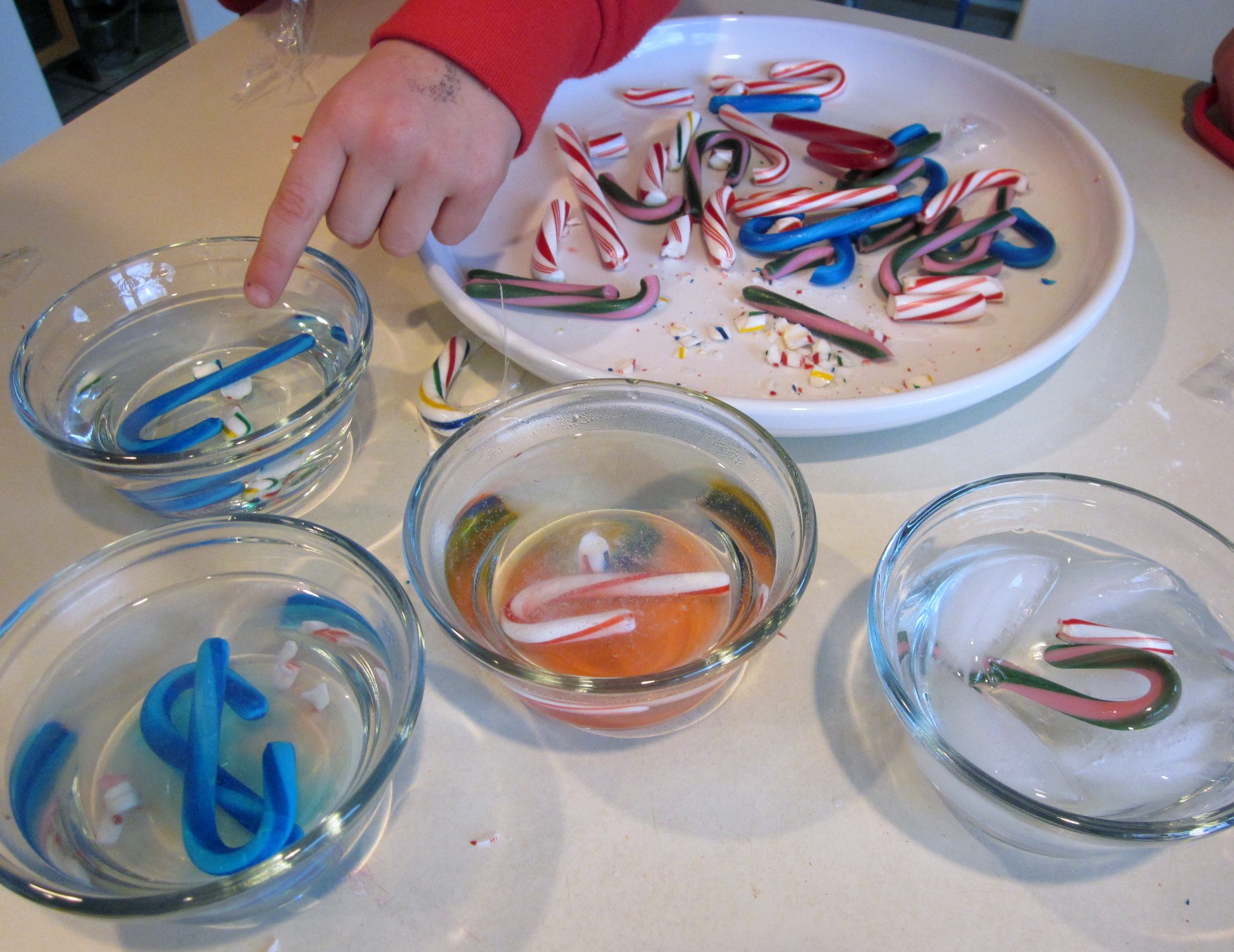
I was inspired by this post by Teach Mama on experimenting with candy canes.  She had her kids test the canes in different liquids: Hot water, warm water, freezing water, and vinegar.


I would have them complete the Scientific Method foldable we've been using since the beginning of the year.


So with that, I'm at the end of my brainstorming!  Do you do any upper grades activities to celebrate Polar Express Day?  I'd love to hear what you do!


Sunday, December 1, 2013

Monitoring Understanding While Reading

We have been working on Monitoring our Understanding while we read lately.  In an effort to combine previous strategies we learned during our "Fix-Up Strategies" unit, I created an organizer that mentioned the most pertinent strategies (in my humble opinion).


This organizer asks students to monitor their understanding while they read.  When they come to a word, sentence, or phrase that confuses them, they use a strategy to clarify their misunderstanding.  The organizer lists several examples of strategies students may use, but I never limit them if they choose to use one that is not listed.

You can pick up a free copy by clicking here.

Now, for some suggested mentor texts because I would much rather use picture books when I'm first introducing an organizer!


This is a great text to model how readers need to closely observe and integrate what is happening in both the pictures and the words. 

 
Use this book to model how to decode a multi-syllabic word and how to use context to determine the meaning of an unknown word. You will authentically need to model rereading to understand!
 
Now, I'm sure there's a ton of great mentor texts out there for this strategy.  I would love to hear your suggestions!

Sunday, November 24, 2013

Reading Comprehension Strategy: Synthesize

One of the toughest reading comprehension strategies for my students is synthesizing information.  In my quest to find good resources for this strategy, I came across the following:

Finding mentor texts for synthesis is tough!  The plot needs to have some kind of twist or change that isn't at all apparent in the beginning.  Here are a couple that work well.


The point of view changes from the Native Americans to Columbus throughout the book.  The illustrations reflect these changes.  For example, the Native American boy sees Columbus's ships as sea monsters and Columbus sees the Native Americans as Indians.


This one is great.  First, because I love Patricia Polacco.  Secondly, you really have to use all the text and picture clues to understand and synthesize all the information.  Through most of the book, you think it's about the girl and her best friend, who is an elephant.  On the very last page, you find out that it's an elephant family and the girl is her best friend. 


Now, I know we are big, bad Fourth Graders, but we still need some cutesy representations of things like synthesis to make them understandable.  For example, I found this unit by Nancy Vandenberge that relates synthesis to baking a cake.  I love this organizer that she made!


You should check out her entire post by clicking here.

Do you have any go-to resources for synthesizing information?  I would love to see them!

Sunday, November 17, 2013

Reading Comprehension: Fix-Up Strategies

We've been working on using fix-up strategies to monitor and fix problems in our reading as they happen.  The organizer below shows several of the strategies we have worked on.  You can pick up a free copy by clicking here.


This organizer includes a place for students to track the following:
Use illustrations
Reread
Read on
Break the word into parts
Use a dictionary

Now, here's my problem:  I know you can use almost any text to model this strategy.  I am having trouble finding recommended picture books to use specifically. 

Do you have any good mentor texts to recommend?

Sunday, November 10, 2013

21st Century Learning: From Seatwork to Feetwork

I just participated in a county-sponsored in-service centered around the book From Seatwork to Feetwork:  Engaging Students in Their Own Learning by Ron Nash.


Mr. Nash taught us some really great techniques for getting students out of their seats and responsible for their own learning.  Since my principal is a big fan of the teacher-led mini-lesson followed by much more student-driven discussion and independent work, this was a great in-service.

For Writing, Social Studies (any subject that requires reading and writing), here are some possibilities:
Go to his website and check out his FREE prereading activities:  Word Splash and Opin

For partnering up:
A version of Clock Buddies that I have used for years
Pairs, trios, or quads:  Fine Feathered Friends

For teaching questioning and speaking with and to others:
Paired Verbal Fluency
A visual of good listening skills


Other great books that offer more strategies for Brain Breaks and using music in the classroom:


Whew!  Lots of information!  Do you have anything similar that you do to incorporate movement or how to cooperate with their learning?  I'd love to hear your ideas!

Sunday, November 3, 2013

Veteran's Day

For our upcoming writing unit on Veteran's Day, we read some great mentor texts to collect character traits for our nation's heroes.  Some of our favorites:


Another great anticipatory set that gives us great ideas for showing our thanks:


I get a bit emotional while it's playing, but I'm unapologetic about that :)

Then we write at least two paragraphs for the students to read aloud to the veterans that come to our Veteran's Day assembly.

Do you have any great mentor texts or videos to get the ideas flowing for Veteran's Day?